Work & Money
How to Tell Your Boss You're Pregnant (With Scripts)
When to say it, what to bring, what the law protects, and the exact words for the meeting and the email after it.

Tell your boss in a short private meeting, ideally early in your second trimester, with three things ready: your due date, a rough leave start, and one sentence about coming back. Then put the same three things in an email that day. The US deadlines in this guide are about leave notice, accommodations and filing a charge, not about how many weeks pregnant you are.
There is a scan photo in your bag and a review on the calendar, and you still have not said it. Here is when, who first, and the exact words.
When and How to Tell Your Boss You're Pregnant
When. Our rule of thumb is 12 to 16 weeks: after the riskiest stretch, before anyone guesses. Go earlier if you are unwell, if your job is physical and you need a change now, if a review or promotion round is coming, or if someone is about to guess.
Who first. Your manager should hear it from you, not from a colleague. Then HR, then the team.
How. A scheduled one to one, in person or on video, not a chat message. Bring the due date, a rough leave start, your plan to return, and anything you need now.
What is the 3 month pregnancy rule? It is a custom, not a rule: the idea is to wait until the first trimester is over before telling others. March of Dimes puts 8 in 10 miscarriages in the first trimester, before the 12th week.
Is 7 weeks too early to tell family you're pregnant? That is yours to decide. Some people wait; others tell early so they are not alone if something goes wrong.
Are you noticeably pregnant at 12 weeks? Usually not yet in a first pregnancy. Healthline puts the first signs of a bump between weeks 12 and 16, later with a first pregnancy than a second. In that window you choose the timing, not your waistband.
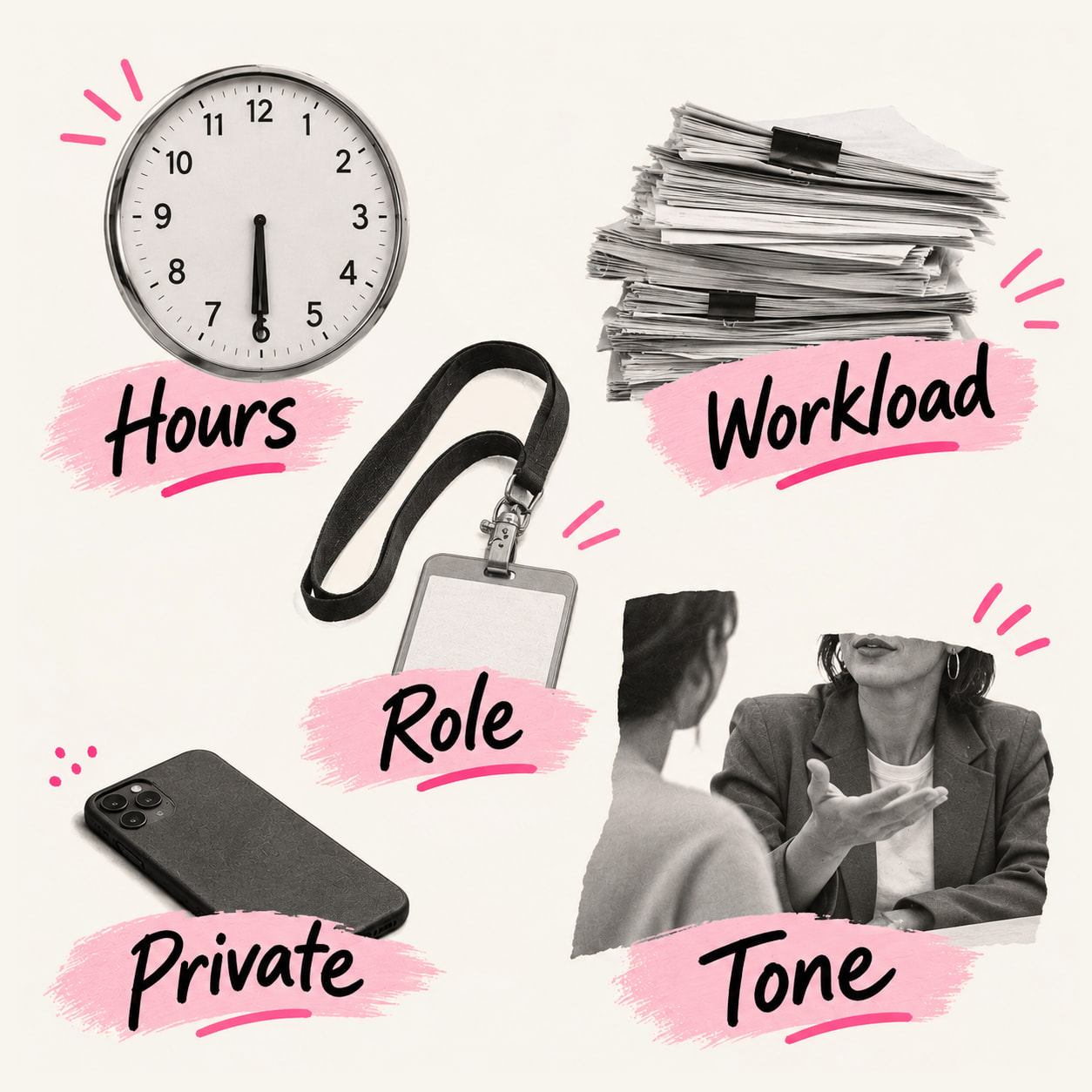
Why This Is Harder for Women: The Law and the Risk
The worry is not in your head. In a 2007 Stanford study, mothers were penalised on perceived competence and recommended starting salary; fathers were not. Pew found in 2019 that 50 percent of employed mothers said being a working parent made it harder to advance, against 39 percent of fathers. Planning this carefully is sensible, not paranoid.
Here is what US law says, in general terms, not advice on your case: for that, talk to the EEOC, the Department of Labor, a union rep or an employment lawyer.
- Pregnancy Discrimination Act. Since 1978, Title VII has covered pregnancy, childbirth and related conditions. At employers with 15 or more employees that reaches hiring, pay, assignments, promotions, training, hours, layoffs and firing. Harassment counts too.
- Pregnant Workers Fairness Act. In force since 27 June 2023 at employers with 15 or more employees: reasonable accommodations for known limitations related to pregnancy, childbirth or related conditions, unless that causes undue hardship. The EEOC's examples include longer breaks, a changed schedule, telework and help with lifting. You do not need special words to ask.
- Family and Medical Leave Act. Up to 12 workweeks of unpaid, job protected leave in a 12 month period, with the same or a virtually identical job waiting. Two tests: your employer has 50 or more employees within 75 miles of your site, and you have worked there 12 months and 1,250 hours in the past year, about 24 hours a week, so a part time job can qualify. The rule asks for 30 days notice where leave is foreseeable, as an expected birth is, otherwise as soon as practicable.
- Paid leave. The FMLA is unpaid. The Department of Labor lists thirteen states and DC with paid family and medical leave programmes. Check yours.
- Retaliation. Punishing you for asking for an accommodation or raising discrimination is itself illegal, and an EEOC charge generally has to be filed within 180 days, or 300 where a state or local agency enforces a similar law.
Your manager should hear it from you, not from a colleague.
How to Prepare, and What to Put in Writing
- Read the handbook first. Parental leave, short term disability, PTO, flexible work. Know what you are owed before anyone tells you.
- Run the two FMLA tests and check whether your state has paid leave.
- Book a one to one. Put nothing in the invite title.
- Separate now from later. Now: the due month, your plan to return, anything you need this month. Later: exact dates and handover.
- Send the email that day, to your manager with HR copied: what you said, the due date, any accommodation agreed. Keep a copy you can reach if your work access ends.
- Tell coworkers after your manager, on your terms. Ask to share it yourself.
- Start a dated log the moment the response feels off: who said what, when, and what changed. Our guide to gender bias at work covers the signs and what to do.
How soon before your due date should you go on maternity leave? Check your employer's policy and any state leave rules. FMLA leave can be used before the birth for prenatal care or when the pregnancy stops you working, but every week taken before comes out of the same 12 workweeks. Our rule of thumb: work as close to your due date as your doctor allows and keep a week in reserve.
How to tell coworkers you're pregnant? After your manager and HR, briefly, in your own words, once you know rough dates so the first question has an answer. One line, then back to work.

What to Say: Scripts for the Meeting, the Email and the Team
Open the meeting:
"I have some good news: I'm pregnant, due in [month]. I'm planning to work until around [date] and to come back after my leave. I wanted you to hear it from me first."
Asking for something now:
"Mornings are rough right now. For the next few weeks, could I start at ten and make the time up in the afternoon?"
The email that day, HR copied:
"Subject: Pregnancy and leave, for the record. Hi [name], thanks for today. As discussed, I'm due in [month], plan to work until around [date] and will return after my leave. Exact dates to follow by [date]. We agreed [accommodation] from [date]."
One line to the team:
"Quick personal update: I'm expecting a baby in [month]. I'll be here until around [date], and we'll sort out cover nearer the time."
If they ask whether you are coming back:
"Yes, that's the plan. Once the dates are confirmed I'd like to talk about the handover and the return."
When the reaction is cooler than you hoped:
"I want to make sure my leave doesn't change how my work is judged this year. Can we agree now what my goals are up to [date]?"
This week: read the leave policy, pick the day, and draft the email tonight. When the dates are set, our guide to returning to work after maternity leave picks up where this one ends.
Key Takeaways
More on Work & Money
View All
Gender Bias in the Workplace: Signs and What to Do
6 min read

How to Ask for a Promotion: A Guide for Women
4 min read

Returning to Work After Maternity Leave: A Real Guide
6 min read

Explore more resources and keep learning with us.
Browse All Resources